

Understanding the Different Types of Plug-In Performance Chips
So you’re thinking about boosting your vehicle’s performance, huh? You’ve probably come across plug-in performance chips, and now you’re knee-deep in Google searches, trying to figure out what it does and which one is right for you. Don’t worry — we’ve got you covered.
Plug-in performance chips are like tiny brains you can give your engine — except smarter, faster, and focused solely on making your ride better. Whether it’s speed, torque, fuel economy, or just better throttle response you’re after, these little gadgets promise big results. But not all chips are created equal. Let’s dive in.
What Are Plug-In Performance Chips, Really?
Plug-in performance chips (also called tuning chips or modules) are electronic devices that connect to your vehicle’s engine control unit (ECU). Their job? To override or modify the signals the ECU sends to various engine components, like fuel injectors and ignition systems.
In simple terms: they tweak how your engine behaves without making permanent changes. Think of it like giving your engine a pep talk — but every time you turn on your ignition.
Why Drivers Love Plug-In Chips
The appeal is pretty obvious. With a plug-in chip, you can:
-
Improve horsepower and torque
-
Enhance throttle response
-
Get better fuel efficiency
-
Customize performance without costly upgrades
And the best part? No wrenches, no greasy hands — just plug it in, and boom, more power (well… almost).
Types of Plug-In Performance Chips
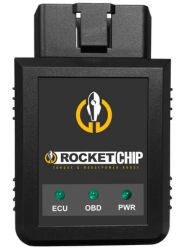
Let’s break down the main categories so you know what’s what.
1. OBD-II Plug-In Chips
These are the most beginner-friendly. They plug directly into the OBD-II port under your dashboard — the same place mechanics use to read trouble codes.
How They Work:
They modify engine parameters like air/fuel ratio, ignition timing, and throttle mapping by communicating with the ECU in real time.
Best For:
Daily drivers who want easy, no-fuss improvements.
Pros:
-
Easy install (literally plug and play)
-
Often come with mobile apps for monitoring
-
Affordable
Cons:
-
Not as powerful or customizable as pro-level tuning
-
Limited performance gains on already-optimized engines
2. Piggyback Chips
Piggyback chips are more advanced. They sit between the ECU and the engine sensors, intercepting and altering signals before they reach the ECU.
How They Work:
They don’t reprogram the ECU directly. Instead, they fool it into making better decisions by tweaking sensor data.
Best For:
Tuning enthusiasts and people with modified engines.
Pros:
-
Mid-range power improvements
-
Can be fine-tuned for more aggressive performance
-
Doesn’t void warranty (in most cases)
Cons:
-
Requires more installation effort
-
Might need dyno testing for best results
3. ECU Reflash/Remapping Devices
Although not always considered “plug-in” in the traditional sense, these devices plug in through the OBD-II port to flash the ECU with new software.
How They Work:
They replace factory maps with high-performance ones, changing everything from boost pressure to RPM limits.
Best For:
Serious performance upgrades or racing setups.
Pros:
-
Maximum horsepower gains
-
Full control over engine behavior
-
Works well with performance parts
Cons:
-
Risky if done wrong
-
May void your warranty
-
Not easily reversible
Performance Chip vs. Tuner – What’s the Difference?
Let’s clear up a common confusion. A performance chip generally refers to a hardware module that modifies data in real-time. A tuner (like a handheld device) uploads new software to your ECU.
In essence:
-
Chip = real-time signal modifier
-
Tuner = ECU programmer
Both can improve performance, but tuners usually offer deeper customization.
Gas Mileage vs. Horsepower: Can You Have Both?
This is the eternal question: can you make your car faster and more fuel-efficient?
The answer? Yes — but with trade-offs.
Many plug-in chips come with different modes:
-
Eco Mode for fuel savings
-
Sport Mode for more aggressive driving
-
Tow Mode for torque-heavy needs
Pick the right mode based on your goal. Just don’t expect to run a 10-second quarter mile and sip gas like a Prius at the same time.
 Installation: How Hard Is It?
 Installation: How Hard Is It?
It depends on the type of chip:
-
OBD-II chips: Plug it in and you’re done.
-
Piggyback systems: May require accessing the engine bay and connecting to various sensors.
-
ECU flash tools: Often need a laptop and proper software.
In any case, always read the manual. YouTube is your friend too.
Do Plug-In Chips Void My Warranty?
Here’s the fine print: Technically, a dealership can’t void your whole warranty just because you used a performance chip. But if something breaks because of the chip — you’re on your own.
Solution? Go for chips that are “warranty safe” or removable. That way, you can pop it out before a service visit.
What About Emissions?
Some performance chips alter fuel mapping in ways that might cause you to fail emissions tests. If you live in a state with strict smog laws (looking at you, California), double-check that your chip is CARB compliant.
Are Plug-In Chips Worth It?
If you want better throttle response, a bit more punch, or a smoother ride — plug-in chips can absolutely be worth it.
Just manage your expectations. But for modest improvements without tearing apart your engine? It’s a solid upgrade.
Tips Before You Buy
-
Know your vehicle: Not all chips work with all makes/models.
-
Read reviews: Real-world feedback is gold.
-
Avoid no-name brands: Trust matters when messing with your engine.
-
Look for return policies: Just in case it doesn’t work for you.
Final Thoughts
Plug-in performance chips are an awesome way to unlock a little extra fun from your ride. Whether you want to squeeze out more MPG, beef up your acceleration, or just feel more connected to your car, there’s likely a chip that fits your needs.
Just remember — more power comes with more responsibility. Buy smart, install right, and drive safe.