

How do performance chips work?
The allure of a quick and easy performance boost for your car is undeniable. Performance chips, also known as engine tuning chips, promise exactly that. But how exactly do these chips work, and are they the magic bullet they seem? Let’s delve into the world of performance chips and explore the science behind their claims.
Understanding the Engine Control Unit (ECU)
Before we dive into performance chips, it’s crucial to understand the role of the Engine Control Unit (ECU). The ECU is essentially the brain of your car’s engine. It receives data from various sensors like the oxygen sensor, mass airflow sensor, and throttle position sensor. Based on this data, the ECU controls vital engine functions like fuel injection, ignition timing, and valve timing. These adjustments are governed by pre-programmed software on the ECU, which manufacturers design for a balance of performance, fuel efficiency, and emissions.
 How Performance Chips Work
 How Performance Chips Work
Performance chips come in two flavors: piggyback chips and remapping chips. Piggyback chips act like external modules that sneak into the conversation between your car’s sensors and the Engine Control Unit (ECU), the brain of your engine. By manipulating the signal the sensors send, piggyback chips can alter the data the ECU receives, ultimately influencing how your engine behaves. Remapping chips take a more direct approach. They involve directly modifying the software on the ECU itself. This is typically done by professional tuners who have access to specialized software and hardware, allowing them to rewrite the engine’s rulebook.
Regardless of their installation method, both piggyback and remapping chips aim to achieve similar results. They typically focus on modifying key engine parameters to optimize performance. One common target is the air-fuel mixture. By adjusting the amount of fuel injected, the chip can create a richer mixture. This can lead to more power, but it’s a balancing act – a richer mixture can also affect fuel efficiency and emissions. Another area of adjustment is ignition timing. Advancing the timing can lead to a more forceful burn within the cylinders, translating to increased power. However, this can also raise engine temperatures and increase the risk of knocking. In turbocharged engines, performance chips can focus on boost pressure. By forcing more air into the engine, they can create greater power output. But exceeding the recommended boost pressure can put excessive stress on the engine.
The Benefits of Performance Chips
Performance chips cater to a variety of desires. The most common goal is to unlock increased horsepower and torque. This translates to a noticeable improvement in acceleration, giving your car a more exhilarating pick-up and overall responsiveness. In some cases, performance chips can even optimize engine performance for improved fuel economy. However, it’s important to remember that this benefit depends heavily on the specific chip and your driving style. Additionally, performance chips can enhance the driving experience by sharpening throttle response. This means the engine will react more readily to your inputs, creating a more connected and engaging feel behind the wheel.
Beyond Plug-and-Play: The Science Behind Rocket Chip Performance Chips
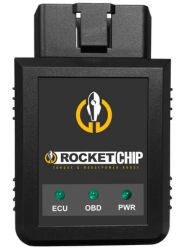
While piggyback chips offer a more DIY-friendly approach, for the most reliable and well-tuned performance gains, consider Rocket Chip . As a leading innovator in performance chip technology, Rocket Chip employs dyno experts to meticulously program each chip specifically for your car’s make and model. Their chips boast enhanced fuel mapping and the latest fuel programming to achieve optimal results. This targeted approach ensures you’re not just getting a generic power boost, but rather, an improvement specifically tailored to unlock your car’s hidden potential. However, it’s always wise to consult with a trusted mechanic to ensure proper installation and discuss any potential modifications that might further enhance the performance gains achieved with Rocket Chip.
The Future of Performance Chips: Beyond Bolt-On Power
Performance chips can be a tempting proposition for car enthusiasts looking to boost their car’s performance. However, it’s important to understand how they work, the potential benefits and drawbacks, and the importance of professional installation. By carefully considering these factors, you can make an informed decision about whether a performance chip is the right choice for your car. Remember, maximizing performance should never come at the cost of safety or reliability.