The Science of Towing: Understanding the Mechanics Behind Increasing Vehicle Power
When it comes to towing, there’s more to the process than merely attaching a trailer and hitting the road. The power required for towing, especially with heavy loads, depends on the precise mechanics and engineering of the towing vehicle. But what is the science behind towing, and how do vehicle upgrades contribute to increased power? In this article, we’ll dive into the mechanics of towing, discussing everything from engine capacity to torque, gear ratios, and suspension systems. By the end, you’ll have a clear understanding of how to increase vehicle power for towing and the critical mechanics that enable a car or truck to safely handle heavy loads.
What Is Towing Capacity, and Why Does It Matter?
Towing capacity is the maximum weight a vehicle can safely pull. It’s a specification that depends on the vehicle’s engine, transmission, brakes, and chassis design. Understanding a vehicle’s towing capacity is essential because towing beyond this limit can strain components, leading to safety risks and potential mechanical failure. The towing capacity is typically listed in the vehicle’s manual and varies significantly based on the make and model.
The Role of Engine Power in Towing
The engine is the cornerstone of a vehicle’s towing capability. Larger engines generate more power, essential for pulling heavy loads. Engine power is measured in horsepower (HP) and torque. Horsepower determines how quickly an engine can perform work, crucial for maintaining speed while towing. Torque, the twisting force, is essential for starting from a standstill, especially with heavy loads. Diesel engines, with their higher torque at lower RPMs, are often preferred for towing due to their superior performance in starting and pulling heavy loads.
Torque and Gear Ratios: The Key to Smooth Towing
Torque and gear ratios are crucial for towing performance. Torque, as discussed, enables a vehicle to overcome the weight of a trailer. Gear ratios, the relationship between engine rotations and wheel rotations, play a significant role in applying torque effectively. Lower gear ratios provide higher torque and better control at low speeds, making them ideal for towing. Vehicles with optimized gear ratios can efficiently harness engine torque for superior towing performance. Automatic transmissions are often preferred for their smooth gear shifts, while manual transmissions offer greater control, especially when downshifting on steep terrain with heavy loads.
Suspension Systems: Handling the Added Weight
Towing significantly impacts a vehicle’s stability, and the suspension system plays a crucial role in managing this increased load. While designed to handle vertical forces, suspension systems also influence weight distribution. Upgrading to heavy-duty shocks, springs, and sway bars can prevent sagging and improve load-carrying capacity. Air suspension systems offer even greater flexibility, allowing drivers to adjust the vehicle’s height for optimal stability. Additionally, weight distribution hitches help distribute the trailer’s weight evenly across the vehicle’s axles, reducing sagging and improving overall control.
Brake Systems and Towing Safety
Towing necessitates not only powerful engines but also reliable braking systems. The vehicle’s brakes are responsible for stopping both the vehicle and the trailer. To handle the increased weight, electric brake controllers are often installed to apply additional braking force to the trailer’s wheels. Upgrading to heavier-duty brake pads and ventilated rotors also improves braking performance by enhancing heat dissipation and reducing the risk of brake fade.
Cooling Systems: Keeping Things Cool Under Load
Towing, particularly in hot weather or uphill, places a significant strain on the engine and transmission due to the increased workload. This generates excess heat that can potentially damage these components. Upgrading to a larger radiator, high-performance fans, and additional cooling channels can help regulate engine temperature and maintain efficiency. Additionally, transmission coolers are often installed to dissipate heat and maintain the integrity of transmission fluid, extending the life of the transmission.
Exhaust Systems: Improving Performance and Efficiency
The exhaust system, while primarily responsible for expelling engine gases, also influences towing power. High-performance exhaust systems reduce back pressure, allowing the engine to operate more efficiently. This modification, popular among towing enthusiasts, can result in slight power gains, enhancing towing performance. Diesel engines, in particular, benefit from turbochargers. By using exhaust gases to spin a turbine and force more air into the engine, turbochargers increase power and improve the ability to pull heavy loads.
Tires and Wheels: Stability and Traction
Tires play a pivotal role in towing, as they bear the weight of both the vehicle and the trailer. Choosing tires with a high load rating is essential to withstand the extra stress of towing. Proper tire inflation and alignment are equally important for optimal stability and traction, especially when towing heavy loads.
Aerodynamics: Cutting Down on Drag
Aerodynamics plays a crucial role in towing efficiency, often overlooked yet significantly impacting fuel consumption. Wind resistance increases with speed, making it essential to minimize drag. Installing wind deflectors on the roof or front of the trailer can improve aerodynamics, reducing fuel consumption. Additionally, lowering the load height on the trailer minimizes wind resistance, leading to a smoother and more fuel-efficient towing experience.
The Role of Electrical Systems in Modern Towing
Modern vehicles feature advanced electrical systems to facilitate towing, powering trailer lights and enabling onboard diagnostics to monitor towing conditions. Upgrading to a high-capacity battery ensures sufficient power for accessories, trailer lighting, and electric brake controllers. Additionally, a secure wiring harness and connectors are crucial for the reliable operation of all lighting and braking systems during towing.
 Planning for Terrain: How Different Road Conditions Affect Towing
 Planning for Terrain: How Different Road Conditions Affect Towing
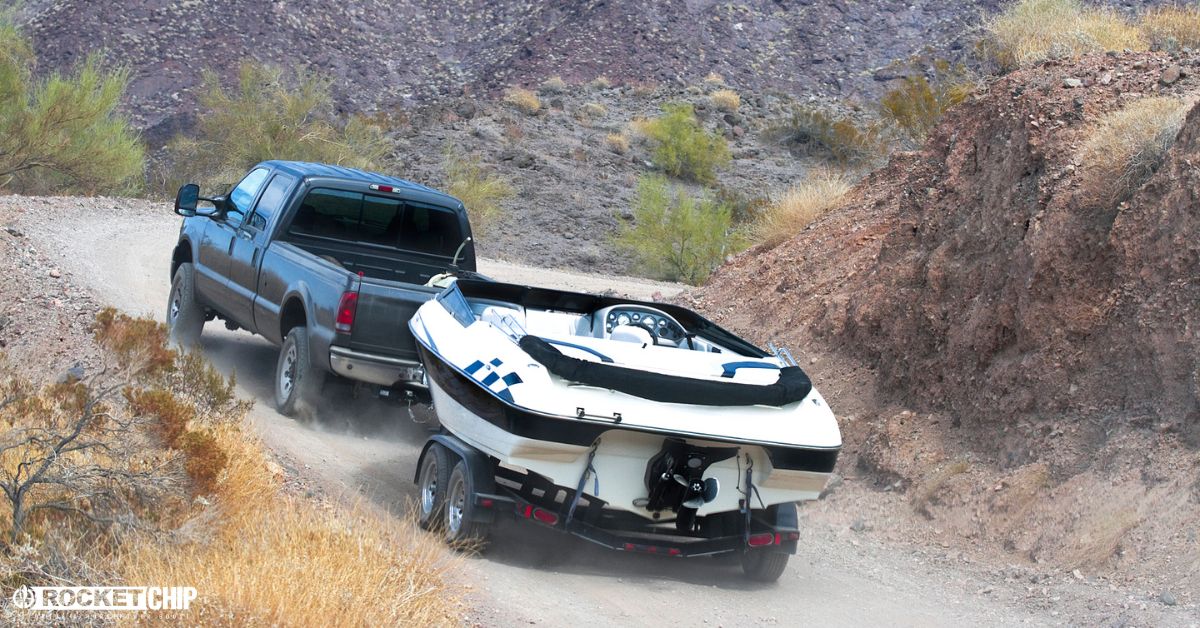
Different terrains can significantly impact towing requirements. Hilly terrain demands more torque and engine power, necessitating lower gear ratios for efficient power delivery. In contrast, off-road towing requires a robust suspension and high-torque output to maintain control and prevent damage on uneven surfaces.
Mastering the Mechanics of Towing
Understanding the science behind towing equips you to make the right choices for safe and effective hauling. From engine torque and gear ratios to upgraded suspension and cooling systems, every component plays a role in ensuring that your vehicle can handle the extra load without compromising safety or performance. Investing in the proper upgrades and keeping a close eye on the mechanics of your vehicle will ensure a smoother, more efficient towing experience.