

Increasing MPG: How Plug-In Performance Chips Can Save You Money
When gas prices climb and the monthly fuel bill starts eating into your savings, it’s time to look for smart ways to stretch every drop of fuel. That’s where plug-in performance chips come in. These little devices may look like techy toys, but they pack a punch when it comes to boosting your vehicle’s miles per gallon (MPG) and saving you serious money at the pump.
Let’s dive into how plug-in performance chips actually work, how they can help with increasing mpg, and whether they’re worth the investment for your ride.
What Is a Plug-In Performance Chip?
Think of a plug-in performance chip as your car’s personal fitness trainer. It tweaks and tunes the way your engine behaves—only instead of pushups and protein shakes, it works with fuel maps, air-to-fuel ratios, and throttle response. These chips plug into your car’s OBD2 (On-Board Diagnostics) port, typically found under the dashboard, and interact with the vehicle’s computer system (ECU).
They don’t physically modify your car, but they change how your engine responds to different driving conditions—more efficiently.
The Science Behind MPG Improvements
While mindful driving habits and proper tire inflation certainly contribute to increasing mpg, performance chips take a more direct approach by optimizing the engine’s fuel consumption through adjustments to fuel injection timing, ensuring more efficient combustion; by fine-tuning the air-fuel ratio for an ideal balance, minimizing wasted fuel; by enhancing ignition timing for smoother power delivery and reduced consumption; and even by modifying throttle response to make acceleration more efficient, essentially teaching your car to operate with the sustained efficiency of a marathon runner rather than the energy-intensive bursts of a sprinter.
Plug-and-Play Simplicity
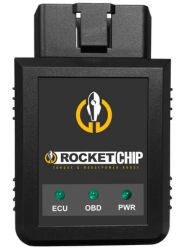
One of the most appealing things about these chips is how easy they are to install. No greasy hands, no wrenches, no trips to the mechanic. You simply plug the chip into your OBD2 port, wait for it to sync with your vehicle, and drive.
Most chips start working within 50–150 miles of driving, adapting to your driving style and car’s behavior. It’s a “set it and forget it” upgrade.
Realistic MPG Gains: What Can You Expect?
Let’s be realistic about what to expect; while a performance chip likely won’t lead to a dramatic doubling of your car’s MPG overnight, most drivers can anticipate a reasonable 5% to 15% improvement on average, along with more consistent fuel economy during stop-and-go city commutes and noticeable gains on extended highway journeys, which, over time, can accumulate into hundreds of dollars in annual savings, contingent on your driving habits and local gasoline prices in Anoka, Minnesota.
Performance Chips vs. Tuning
While both performance chips and ECU tuning are geared towards enhancing a vehicle’s performance and fuel efficiency, they differ significantly in their complexity and cost: performance chips offer a simple, plug-and-play solution that is easily reversible and tailored for everyday drivers, whereas ECU tuning, or remapping, involves a more intricate process of connecting your car to a computer, downloading specialized software, and often requires a visit to a professional performance shop; essentially, performance chips can be viewed as the do-it-yourself option for those seeking improved fuel economy without the complexities of ECU reprogramming, the risk of voiding warranties, or extensive time spent working on their car.
Do Plug-In Chips Void Your Warranty?
Ah, the million-dollar question. The short answer? Usually not.
Most plug-in performance chips are considered “non-invasive” modifications. They don’t change your vehicle permanently and can be unplugged at any time. That said, it’s always smart to check your vehicle’s warranty terms or speak with a dealer just to be sure.
If you’re leasing a car or planning to trade it in soon, just unplug the chip before inspection—simple as that.
Are All Performance Chips Created Equal?
It’s crucial to understand that when it comes to performance chips, much like phone chargers, price often reflects quality, as the market is flooded with options exhibiting significant variations in effectiveness; while inexpensive chips priced under $30 frequently turn out to be mere gimmicks with no tangible benefits or, even worse, can disrupt your vehicle’s systems, investing in reputable brands, like Rocket Chip, within the $100 to $400 range typically ensures compatibility testing, reliable fuel efficiency improvements, and demonstrable performance gains, making it wise to prioritize chips backed by positive user reviews, confirmed compatibility with your specific car make and model, and ideally, a customer satisfaction guarantee.
Safety and Reliability
Many drivers worry that adding a performance chip could damage their engine. But if you’re using a quality chip from a trusted brand, the risk is minimal to none.
These chips don’t overclock your engine like a teenager pushing a gaming PC—they work within safe factory limits. They optimize, not overhaul.
 Tracking Your MPG Gains
 Tracking Your MPG Gains
Want proof that the chip is increasing mpg? Use an MPG tracking app or your car’s onboard fuel economy display. Track your average mileage before and after installing the chip. Most users see the needle inch upward after about two weeks of driving.
Pair it with basic habits—regular maintenance, smooth driving, tire inflation—and you’ll notice gains even faster.
The Long-Term Financial Impact
Consider this quick calculation: if you drive 15,000 miles annually in a car that averages 25 MPG with a gas price of $3.50 per gallon, you’d spend $2,100 on fuel each year; however, if a performance chip improves your fuel efficiency by a modest 10% to 27.5 MPG, your annual fuel cost would drop to approximately $1,908, resulting in nearly $200 in yearly savings, and over a five-year ownership period, this small device could potentially save you close to $1,000.
Are Performance Chips Worth It?
If you want better gas mileage, don’t want to mess with your engine, and like saving money with minimal effort—then yes, a plug-in performance chip is definitely worth it.
It’s like giving your car a quick brain upgrade. Smarter driving, smoother performance, and lower fuel costs without lifting a wrench.
Increasing MPG
Plug-in performance chips are the quiet heroes of increasing mpg. They don’t roar like a new exhaust system or dazzle like a fresh paint job—but they do their job behind the scenes, making your car run smoother and cheaper.
If saving money at the pump without voiding warranties or diving into engine mods sounds like your kind of upgrade, it’s time to consider plugging in.
Your wallet—and your engine—will thank you.