
Boost Your MPG: Essential Fuel-Saving Technologies
If you’ve ever felt that sinking feeling as you watch gas prices climb while your fuel gauge dips, you’re not alone. Fuel costs can take a serious bite out of your budget. But here’s the good news: thanks to modern advancements in fuel-saving technologies, you can stretch every gallon of gas and save a lot more money on the road. Let’s explore some game-changing tech designed to boost your miles per gallon (MPG).
What Is MPG and Why Does It Matter?
MPG, or miles per gallon, measures how far your car can travel using one gallon of fuel. The higher your MPG, the more efficient your car is—and the more money you save at the pump. Beyond saving cash, better fuel efficiency reduces your carbon footprint, making it a win-win for both your wallet and the environment.
The Rise of Fuel-Saving Technologies
The automotive industry has made leaps and bounds in introducing technologies that focus on maximizing fuel efficiency. With sustainability and cost-saving in mind, carmakers are integrating smarter systems that deliver more miles for less fuel. Here are some of the most innovative and practical technologies to consider.
Improving MPG with a Plug In Performance Chip
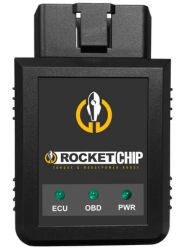
Rocket Chip’s plug-in performance chips are a game-changer for drivers looking to enhance their vehicle’s performance and fuel efficiency without extensive modifications. These innovative chips are designed to optimize your car’s engine by adjusting fuel-to-air ratios, improving throttle response, and maximizing horsepower output. Best of all, they are easy to install—simply plug the chip into your vehicle’s OBD-II port, and you’re ready to go. With Rocket Chip USA, drivers can enjoy a noticeable increase in MPG, making every mile more exciting and economical. Whether you’re driving a compact car, SUV, or truck, these performance chips are tailored to deliver results.
Improving MPG: Start-Stop Systems
Start-stop systems help conserve fuel by automatically shutting off your engine when the vehicle comes to a complete stop, such as at a red light or in heavy traffic. The engine seamlessly restarts as soon as you depress the gas pedal. This technology effectively reduces fuel consumption by preventing unnecessary idling, particularly beneficial in stop-and-go city driving conditions.
Improving MPG with Cylinder Deactivation
Cylinder deactivation is a fuel-saving technology found in many modern engines. This system improves fuel efficiency by temporarily deactivating a portion of the engine’s cylinders during low-demand driving conditions, such as highway cruising. By reducing the number of cylinders in operation, fuel consumption is significantly decreased. This technology can enhance your miles per gallon (MPG) by up to 20% while maintaining full engine performance when necessary.
Low Rolling Resistance Tires
Low rolling resistance tires are specifically designed to minimize the energy required to move the vehicle forward. By reducing friction between the tire and the road, these tires enhance fuel efficiency without compromising safety. This translates to improved traction and reduced energy loss, ultimately contributing to better overall vehicle performance.
Turbocharged Engines
Turbochargers have become a popular technology for enhancing fuel efficiency without compromising engine power. By utilizing exhaust gases to spin a turbine, turbochargers force more air into the engine’s cylinders. This allows smaller engines to generate the same level of power as larger engines, resulting in improved fuel economy and increased performance.
Smart Cruise Control Systems
Adaptive cruise control enhances fuel efficiency by maintaining a steady speed and automatically adjusting to traffic flow, minimizing unnecessary acceleration and braking. This smoother driving style contributes to improved miles per gallon (MPG) by reducing fuel consumption.
 Smart Energy Management Systems
 Smart Energy Management Systems
Modern cars incorporate sophisticated energy management systems that optimize the vehicle’s energy usage. These systems intelligently distribute power to various components, such as the air conditioning system, while minimizing strain on the engine. By efficiently managing energy demands, these systems reduce fuel consumption and improve overall efficiency.
Eco Mode Driving
Many vehicles now offer an Eco Mode setting, which adjusts your car’s performance to prioritize fuel savings. This typically involves limiting throttle response and optimizing transmission settings for reduced fuel consumption. Eco Mode is particularly well-suited for city driving or commutes where fuel efficiency is more important than maximizing speed.
Tips for Maximizing These Technologies
To maximize your miles per gallon (MPG), fuel-saving technologies should be paired with smart driving habits. These include maintaining proper tire inflation, avoiding aggressive driving maneuvers such as rapid acceleration and braking, adhering to your car’s recommended maintenance schedule, and reducing excess weight in your vehicle by clearing out unnecessary items.
Improving MPG: Drive Smarter, Save More
Fuel-saving technologies have revolutionized the way we drive, offering smarter solutions to get the most out of every gallon. Whether you’re upgrading to a hybrid, relying on smart cruise control, or simply using Eco Mode, these advancements are here to make driving both cost-effective and eco-friendly.
The next time you’re at the pump, you can take comfort in knowing that you’re doing your part to save money and protect the planet. Ready to improve MPG? Start exploring these incredible technologies today and watch your savings roll in.